News
Jumia: five keys to understanding the turning point of the African e-commerce pioneer
August 17, 2026In the News
By raising $50 million on August 12, Jumia is finally aiming for profitability, promised for 2027. This is the latest episode in a turbulent saga: from Lagos to Wall Street, from stock market highs to market warnings, the African e-commerce pioneer has never stopped gambling with its future. A look back at the 5 key phases of its history.
By Régis Pangou
From Lagos to Wall Street: meteoric rise and trial for "Africanness"
L'The adventure began in 2012 in Lagos. Two former Rocket Internet employees —the flagship German high-tech company—Frenchmen Sacha Poignonnec and Jérémy Hodara , wanted to transpose the Amazon model to Africa , adapted to local realities. Supported by the German incubator, the project grew rapidly: by 2016, Jumia was presented as the first African "unicorn," valued at over one billion dollars. On April 12, 2019, it reached a historic milestone by listing on the New York Stock Exchange —a first for an African digital giant. The stock opened at $14.50, and the operation raised nearly $200 million. However, a debate has clung to Jumia since its inception: to what extent is it African? French founders, German capital, a holding company long registered in Berlin, an American listing… The “pan-African champion” was initially conceived and financed outside the continent — an ambiguity that, even today, nuances the narrative of the “African” e-commerce pioneer.
The real challenge has never been finding customers, but building the infrastructure
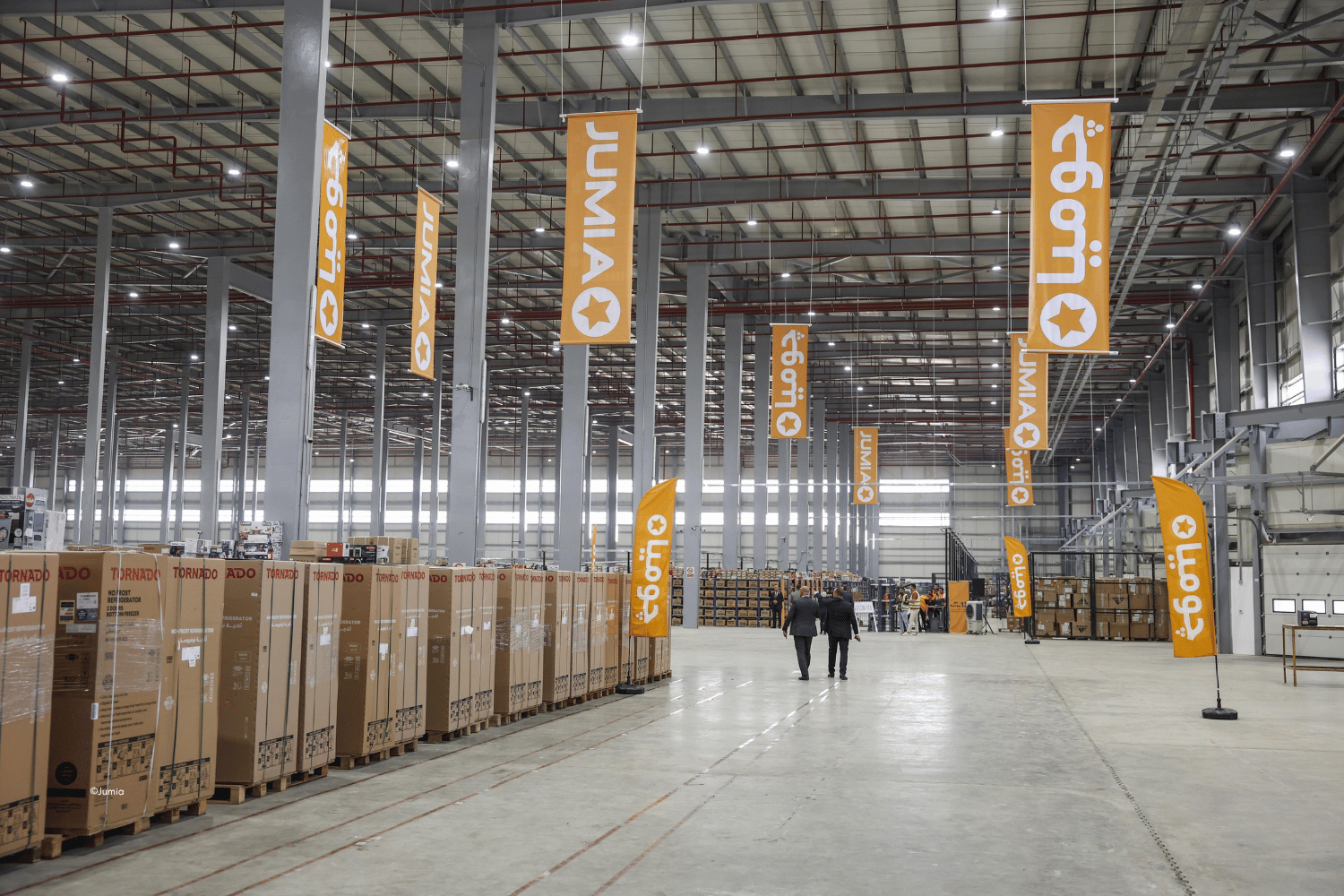
Jumia's paradox lies in its playing field. Africa offers a vast market—a young population, urbanization, and explosive mobile adoption—but e-commerce there runs up against fragmented infrastructure. Delivering a package in Lagos, locating an address due to the lack of a reliable addressing system, offering a suitable payment method when cash dominates: these are all obstacles unknown in mature markets. Lacking a pre-existing ecosystem, Jumia had to build its own—logistics, warehouses, and the JumiaPay payment solution . This choice weighed heavily on its costs and fueled years of losses in economies with limited purchasing power where the "last mile" quickly erodes margins. But this infrastructure, however costly, has also become its greatest asset: a barrier that its new rivals, as we shall see, do not possess.
From glory to the wilderness
The euphoria was short-lived. Less than a month after Wall Street , the feared hedge fund Citron Research , known for shorting stocks, publicly accused Jumia of "false and misleading statements and omissions ." In short, of having inflated its figures to attract American investors. The company denied the allegations, but the stock price plummeted and distrust took hold. In 2020, the group settled shareholder class-action lawsuits for $5 million, without fraud being proven—the author of the report even admitted to being a buyer of the stock a few months later. The stock market's performance, meanwhile, was a rollercoaster: fueled by post-Covid fever, the stock price nearly reached $70 in early 2021 before collapsing below $2 in the spring of 2025. By the summer of 2026, it was trading around $6, a fraction of its peak. In fact, behind the stock market roller coaster of recent years, there was a stubborn reality: year after year, Jumia burned through cash without finding the path to profitability.
The Dufay turning point: less expansion, more financial discipline
The turnaround came from a change in personnel and strategy. In November 2022, the two founders stepped down, handing the reins to Francis Dufay , a seasoned executive with extensive experience in the field. A former McKinsey consultant , he had spent eight years managing the Ivorian subsidiary—one of the group's most profitable markets—before taking the helm. His approach was clear: profitability before expansion. The refocusing was drastic. Jumia abandoned food delivery, withdrew from South Africa and Tunisia at the end of 2024, followed by Algeria in early 2026, to concentrate on eight markets: Nigeria, Egypt, Morocco, Kenya, Ghana, Uganda , and two Francophone strongholds, Ivory Coast and Senegal . The workforce shrank dramatically, from 4,318 employees at the end of 2022 to… fewer than 2,000 at the beginning of 2026. An unprecedented purge, but the results began to follow. In 2025, revenue is projected to increase by 13% (to $188.9 million) and the pre-tax loss will decrease by a third. This momentum accelerates in the second quarter of 2026: sales are up 14%, GMV (Gross Monthly Volume) is up 20%, and the adjusted EBITDA loss is reduced by more than a third. In Nigeria, its core market, orders even surged by 34%!
$50 million for the final stretch
It is in this context that Jumia announced a $50 million funding round on August 12. The operation speaks volumes about its new strategy: the International Finance Corporation (IFC, a subsidiary of the World Bank Group) is contributing half, and the Axian Group —a Malagasy conglomerate already among its initial shareholders—is providing the remaining capital. After having been financed from abroad, the pioneering company is now seeing African and development capital invested in its recovery. The money will no longer be used for expansion, but for consolidation: logistics, platform, and retained markets. The stakes are all the higher given the emergence of a new and formidable competitor: the Chinese platforms Temu and Shein , with their colossal market power (each generating tens of billions of dollars in annual revenue). However, their model relies on cross-border shipping from Asia; it lacks the local logistics network that Jumia has spent ten years building. The entire challenge lies in transforming a historical handicap—the cost of infrastructure—into a decisive advantage. The timeline is now unambiguous: breakeven adjusted EBITDA and positive cash flow by the fourth quarter of 2026, with the first profitable year in 2027. After fourteen years of rapid growth, Jumia is thus on the verge of proving that a pan-African e-commerce model can finally generate sustainable profits.
Read the original article on Forbes AFRIQUE
About Jumia
Jumia is a leading e-commerce platform in Africa. Our marketplace is supported by our proprietary logistics business, Jumia Logistics. Jumia Logistics enables the seamless delivery of millions of packages.
Follow us on, Linkedin Jumia Group and X @Jumia_Group
For more information about Jumia:
Abdesslam Benzitouni
[email protected]